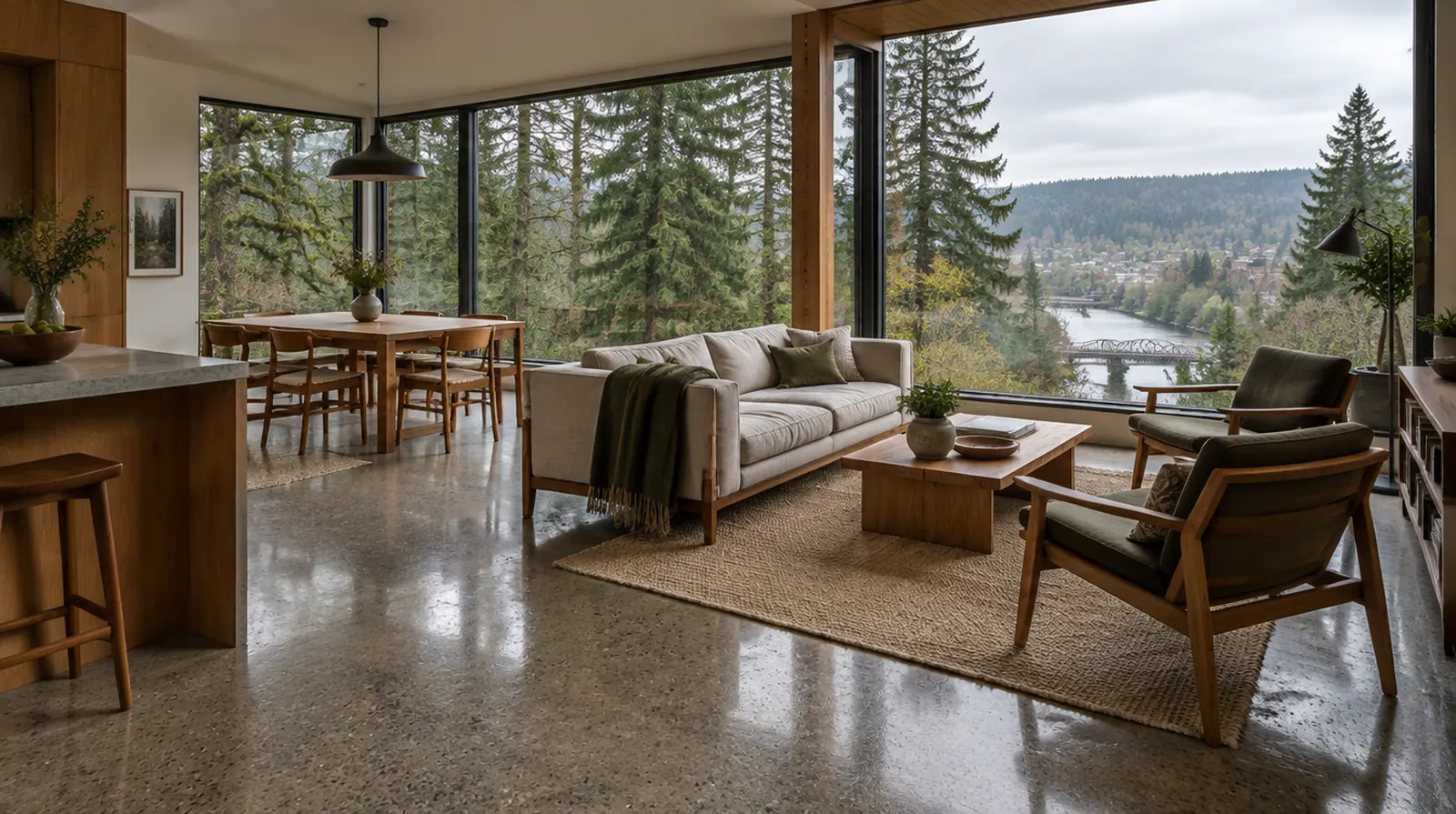
How polishing works
Polished concrete is a mechanical process. We use planetary grinders fitted with diamond tooling, starting with coarse metal-bond diamonds that cut through the surface and working up through finer resin-bond pads. Each pass removes the scratches from the one before it. Partway through, we apply a lithium silicate densifier that soaks into the concrete and reacts with it, making the surface harder and less porous. The final passes create the sheen, from a soft matte to a highly reflective finish.
Finally, we apply a penetrating guard that helps the floor resist stains from coffee, wine and oil. The result is a floor that is part of the building rather than a layer sitting on top of it.
Choosing the look
There are two decisions: how much of the stone to show and how shiny to go. A cream finish barely touches the top paste and gives a smooth, even gray. Salt and pepper exposes fine sand. A full aggregate grind reveals the larger stones in the mix, which gives each floor a unique character. For sheen, we typically refer to levels from flat through satin and semi-gloss up to high gloss. Many homeowners choose a satin finish because it reflects light softly and hides footprints. Offices and retail stores often prefer a brighter shine.
Color can be added with dyes before densifying. Warm browns, grays and blacks are common choices. Saw-cut patterns or borders can also add design without changing the floor's durability.
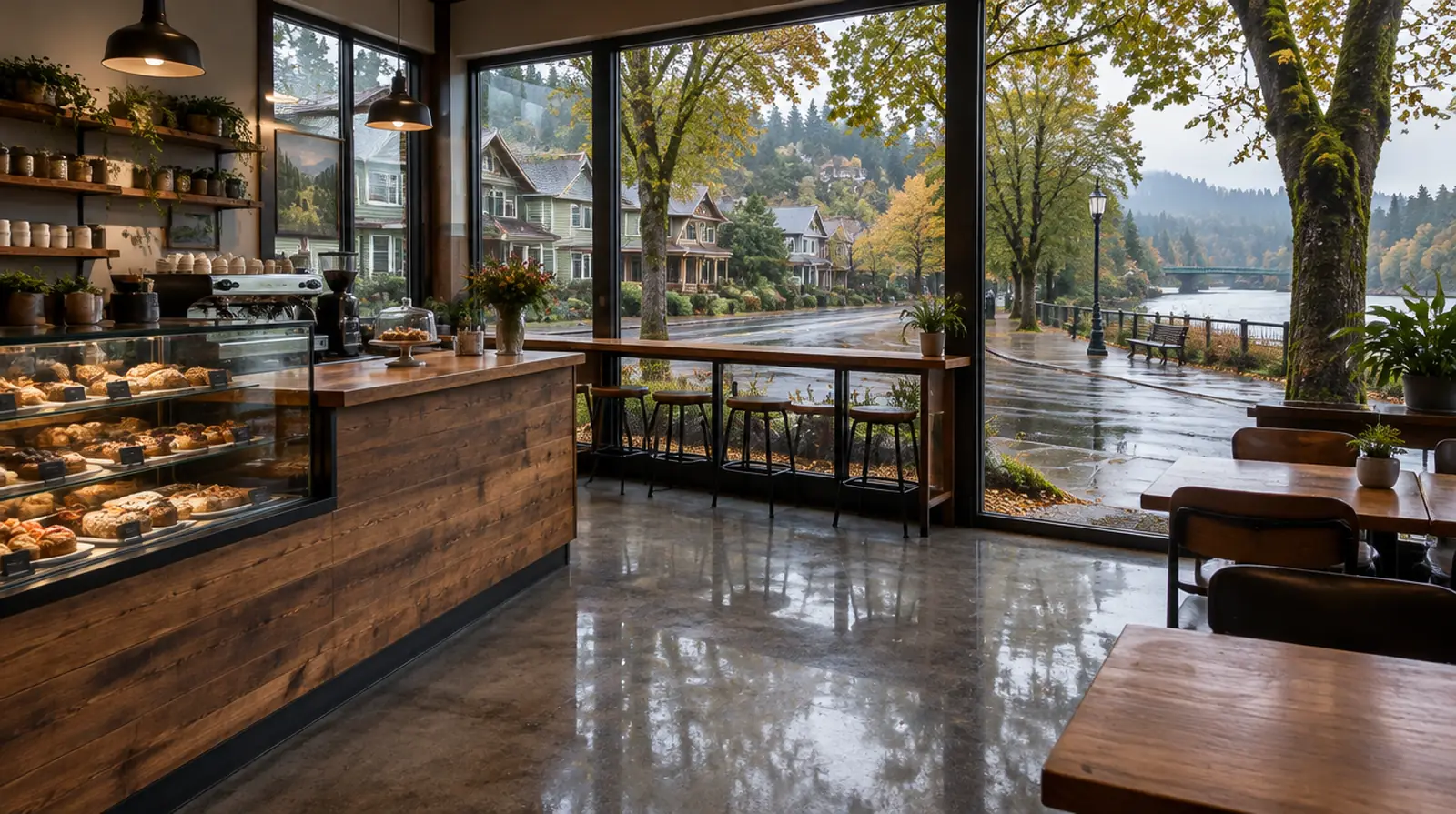
Where it works best
Polishing is a great fit for offices, galleries, retail stores, coffee shops, restaurants with dining rooms, modern homes with slab-on-grade construction and remodels that expose an old slab after carpet or tile is removed. It is also a smart choice in spaces where a coating could fail because of moisture coming up through the slab, since polished concrete breathes.
It is less suited to areas that see harsh chemicals, constant standing water or heavy oil, such as garages and commercial kitchens. For those spaces we usually recommend a resin system like garage epoxy or one of our commercial systems.
What to expect from an existing slab
Every slab is different. Old concrete may have patches, cracks, tile mastic, paint, carpet tack strip holes or uneven areas where it was poured by hand. Some of those marks will remain visible after polishing, and many owners like the history they show. We fill cracks and holes with color-matched filler, but we always tell you honestly what the finished floor is likely to look like. A small test area during the estimate visit is a good way to see how your slab responds.
Durability and care
Polished concrete is one of the lowest-maintenance floors you can own. Daily care is dust mopping and occasional damp mopping with a neutral cleaner. Acidic cleaners and vinegar should be avoided because they can etch the surface. In busy commercial spaces, periodic burnishing with a high-speed machine keeps the shine bright. Over many years, the floor can be re-honed and re-guarded instead of replaced.
Timelines
A typical residential polish takes two to four days, depending on the size of the room and how much grinding the slab needs. Commercial projects are scheduled in phases. The process is dusty in principle, but our equipment uses vacuum extraction to keep the air clean. You can walk on the floor almost immediately after we finish, and furniture can return the same day once the guard dries.
New construction and remodels
If you are building or remodeling, polishing can be planned from the start. We can talk with your builder about the concrete mix, finishing method and curing so the slab polishes evenly later. On remodels, pulling up carpet or vinyl often reveals concrete that only needs adhesive removal and grinding to become a handsome, durable floor. Many homeowners are surprised by how much character an old slab shows once it is polished, from small stones to faint trowel marks left by the original crew.
to plan a polished floor.
Call (541) 243-7117 for a free estimate.