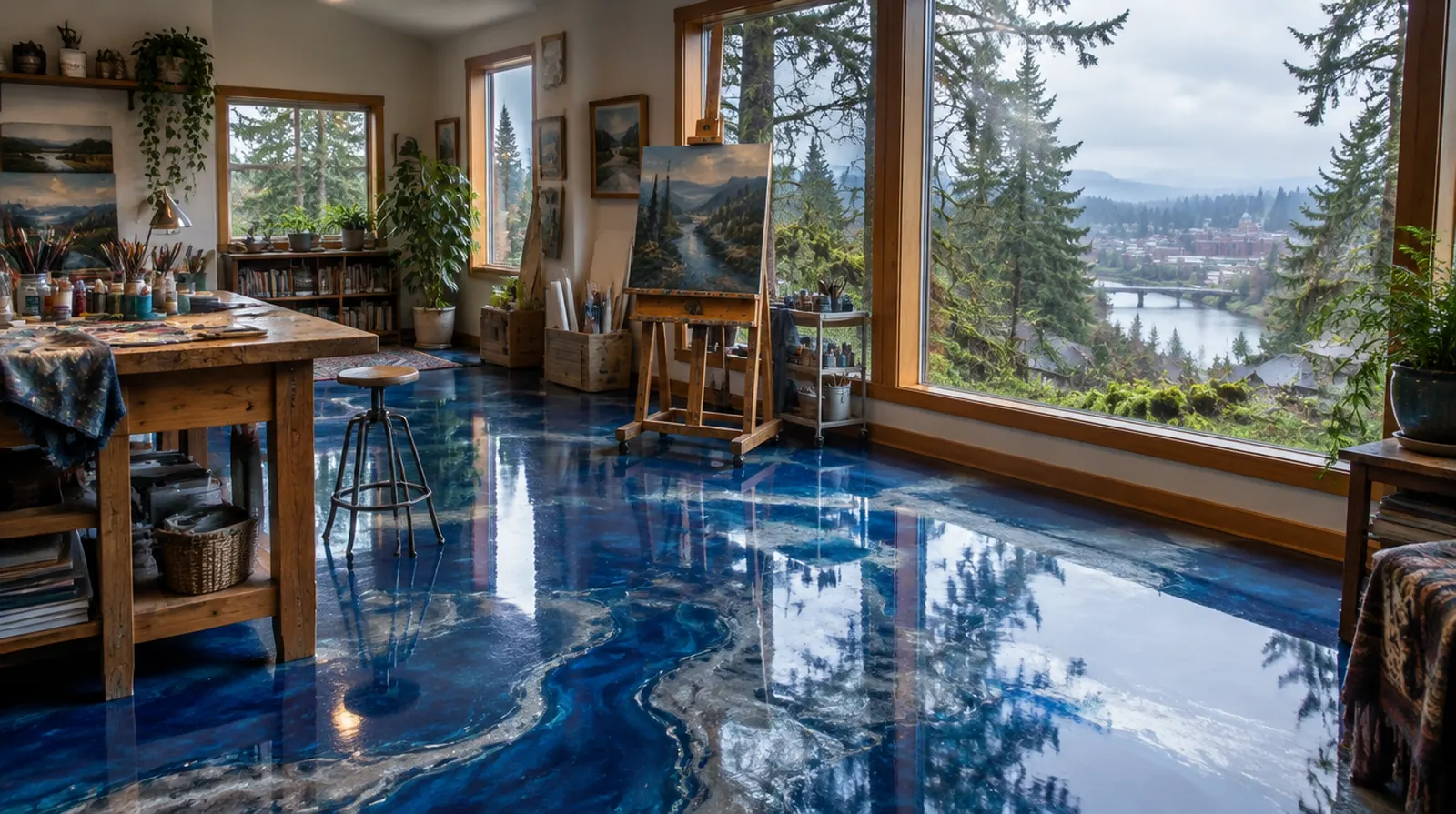
What makes metallic different
Metallic epoxy combines clear resin with fine reflective pigments. As the resin flows across the floor, the pigment particles move and settle, creating patterns that look like marble, flowing water, clouds or molten metal. The installer shapes those patterns by hand with rollers, trowels and other tools while the resin is still wet. The result is a high-gloss, seamless floor with real depth.
Because every pour behaves a little differently, no two metallic floors match exactly. We plan the colors and technique with you ahead of time so the final floor reflects the look you have in mind.
Spaces where it shines
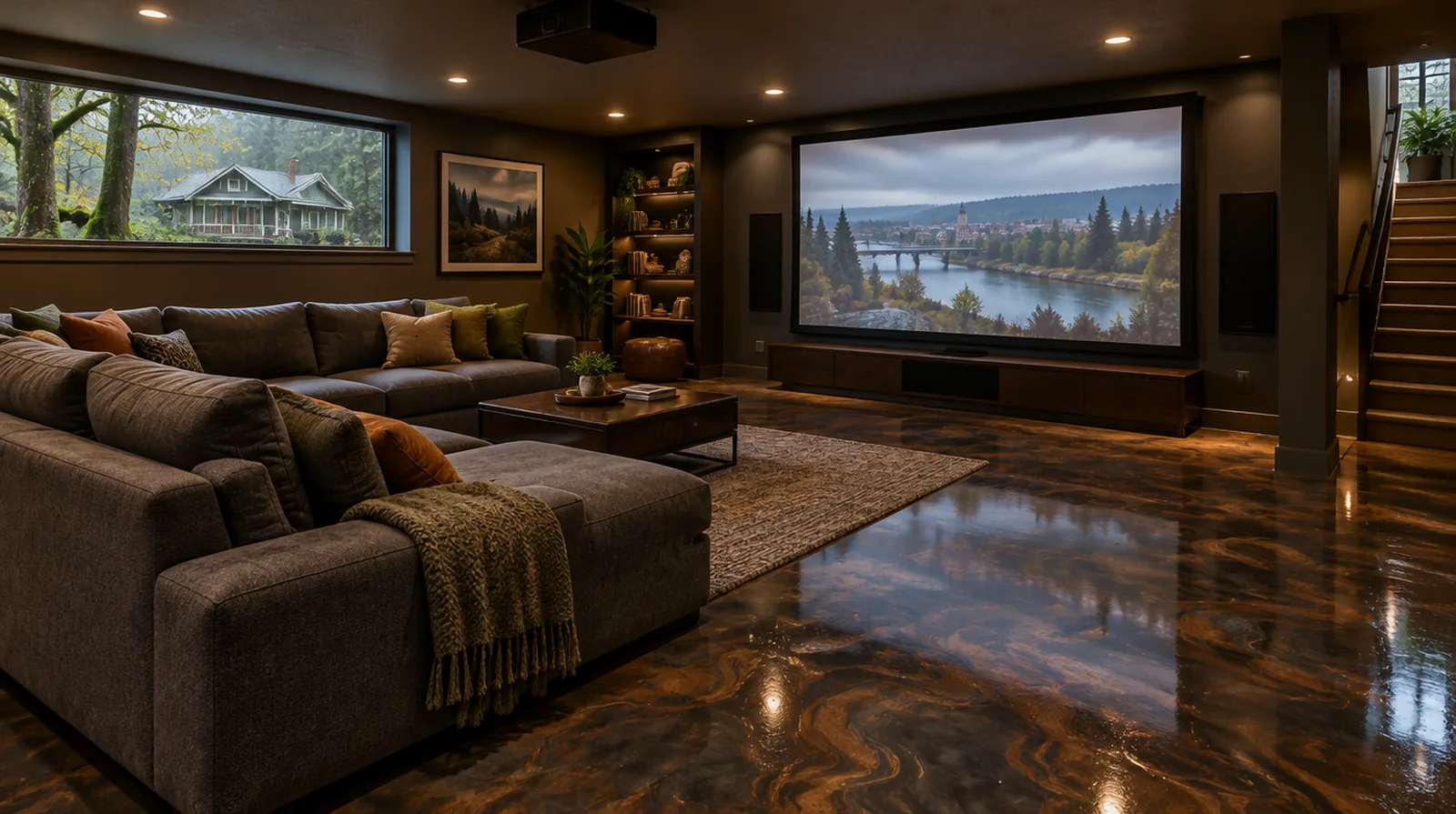
Metallic floors are popular in finished basements, media rooms, home studios, bars, wine cellars and bonus rooms. Commercial clients choose them for salons, galleries, boutiques, tasting rooms, offices and dealership showrooms. They work beautifully in creative spaces where the floor can be part of the design.
We usually steer working garages toward flake floors, since metallic is smoother and shows dust and water spots more readily. If you want a show garage, we can add texture to the topcoat for better traction.
Prep for a mirror finish
Every bump and seam can show through a glossy metallic floor. We grind the concrete, fill cracks and joints, and apply a skim coat where needed to create a smooth, level surface. Basements are tested for moisture, since water vapor can cause bubbles or haze in clear resin. Where a basement slab is damp, a moisture barrier primer goes down first.
System layers
- Primer: seals the slab and prevents outgassing.
- Tinted base: a solid color that sets the tone.
- Metallic coat: the decorative layer, worked by hand.
- Protective topcoat: clear urethane or polyaspartic for scratch resistance and sheen.
Color ideas
Deep blues and teals recall the river and coastline. Charcoal with silver gives a modern, industrial feel. Copper and bronze add warmth to basements and bars. Soft pearl and champagne tones brighten dark rooms. We can also blend two or three colors for a custom look or match a brand palette.
Care
Use soft dust mops and microfiber pads, and clean with a pH-neutral cleaner. Place mats at entrances to catch grit, and add felt pads to furniture legs. Over time, the topcoat can be scuffed and refreshed to restore its gloss without touching the decorative layer underneath.
Time and budget
Metallic floors take a bit longer than standard coatings because of extra prep and hand work. Most residential rooms are finished in two to three days, plus cure time before furniture returns. The price depends on the size of the room, the condition of the concrete and the complexity of the design. We provide a written estimate after the visit.
Is metallic a good fit?
If you want a floor that feels like custom art and you are willing to give it a little gentle care, metallic is an excellent choice. If the space sees heavy equipment, constant grit or wet tires, consider polished concrete or a flake system instead. We are happy to show samples of each during the visit.
Working with damp basements
Many basements and lower levels in town sit against wet soil for months at a time. Before a metallic floor goes down, we test the slab with a calibrated meter and, when needed, a calcium chloride or relative humidity test. High readings are not a deal-breaker, but they change the plan. A moisture-mitigating primer is applied first so vapor coming up from the ground cannot push the decorative layers off later. We also check for efflorescence, the white powdery residue that shows where water has been moving through the concrete, and grind it away completely. That extra step is what keeps a glossy basement floor looking the way it did on the day it was poured, instead of developing cloudy spots or small blisters after the first rainy season.
to design a metallic floor.
Call (541) 243-7117 for a free estimate.